Video orientation used to be a simple technical choice. Today, it’s a strategic decision that affects how audiences engage with content, how algorithms prioritise distribution, and how effectively a brand communicates its message.
The rise of mobile consumption has shifted the balance. However, both vertical and landscape formats still have important roles to play in a smart video strategy.
This guide will help you understand:
- Why vertical video dominates mobile platforms
- Where landscape still shines
- How to plan for both in your 2026 content strategy
Content Consumption Method
In 2026, content consumption continues to evolve toward mobile-first behaviour. I think we can all agree with that.
Research shows that a significant portion of online video is now viewed on mobile screens, where vertical orientation feels natural and immediate. In fact, more than 80 percent of mobile video viewing occurs with phones held upright. That means content created for portrait mode aligns with how people naturally consume video today.
Video orientation impacts not only how long viewers stay with content, but also how platforms distribute that content. Marketers report that vertical videos are now the most uploaded format on social channels and generate noticeably higher engagement than horizontal videos in mobile feeds.
With these shifts, understanding when to use each orientation is now essential for brand visibility and impact.
—
—
Orientation Usage Comparison
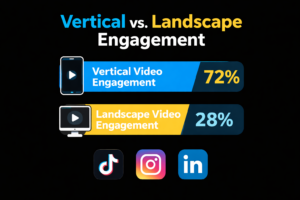
Vertical vs Landscape
This visual reinforces why format choice affects performance.
Vertical Video: The Mobile-First Format
Vertical video has become the dominant format on mobile-centric platforms like TikTok, Instagram Reels, and YouTube Shorts. These platforms were built for portrait orientation and reward native upload formats with broader reach and higher watch completion.
Mobile devices are designed to be used vertically. Research shows that users are significantly more likely to keep their phones upright and are less inclined to rotate them for viewing. This means vertical videos:
- Use most of the screen space
- Avoid black bars or letterboxing
- Keep interactive elements within thumb reach
- Deliver a more immersive experience without asking the viewer to adjust their device position
Vertical content also tends to retain attention better in short videos, which remain the most effective length for social impact and brand recall.
Visual Reference — Vertical Video Experience
Suggested graphic:
An illustration of a smartphone screen showing:
- TikTok/Reels full-screen vertical video
- Eye path visualization showing where users focus
- Icons for watch time, engagement, and completion
This brings the mobile experience to life visually for readers.
Landscape Video: Strengths and Strategic Uses
Landscape video still matters, especially in professional contexts where:
- Wide vistas, cinematic shots, and spatial storytelling are important
- Complex scenes require broad framing
- Multiple subjects or interactions must fit in a single shot
- Desktop and television viewing are expected
Platforms like YouTube and broadcast media remain predominantly landscape. This orientation gives visual room for composition, layered storytelling, and traditional filmmaking techniques that are hard to replicate in a narrow portrait frame.
For brand films, product launches, documentaries, interviews, and longer form storytelling, landscape continues to be the go-to orientation.
In many high-quality productions, landscape is still preferred for desktop viewing, presentations, and immersive visual narratives where contextual space matters.
When to Use Each Format in 2026
Here’s a practical orientation matrix you can follow:
| Situation | Best Format | Reason |
|---|---|---|
| Short social videos | Vertical | Full screen, mobile engagement |
| Brand storytelling and ads | Both | Use vertical for discovery, landscape for long narrative |
| YouTube long form | Landscape | Wider framing, cinematic feel |
| Product demos | Both | Close vertical snippets + wide landscape demonstrations |
| Internal comms and presentations | Landscape | Desktop-friendly |
Choosing formats this way aligns content with how audiences prefer to watch their videos, without forcing viewers to adapt to a format.
Visual Reference — Format Decision Flowchart
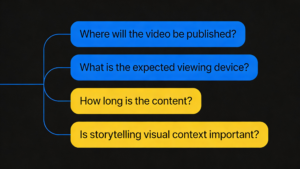
Decision Flowchart
This helps content planners quickly choose the right orientation.
Cropping and Editing: What to Avoid
One common mistake is capturing a landscape video and then cropping it into vertical later. Cropping reduces overall image detail, alters composition, and can cut out important visual information. Most cameras are designed to capture maximum detail — a compromised frame loses both clarity and impact.
If you need both orientations, shoot with both in mind. This may mean setting up cameras or planning shots so that each orientation captures the essential visual elements without losing meaning.
Conclusion
In 2026, orientation decisions go beyond personal preference. They are strategic choices that affect how your audience consumes, engages, and responds to your video content.
Vertical video remains dominant for mobile, short-form engagement. Landscape continues to be essential for cinema, presentations, and richer visual storytelling.
The smartest content strategies adopt both formats in ways that match audience habits and platform requirements. Understanding the strengths of each orientation gives brands, startups, and big companies the flexibility to connect deeply with viewers — wherever they are.
Align your video formats with where your audience watches and how they engage, and your content will perform in line with how people truly consume media today.